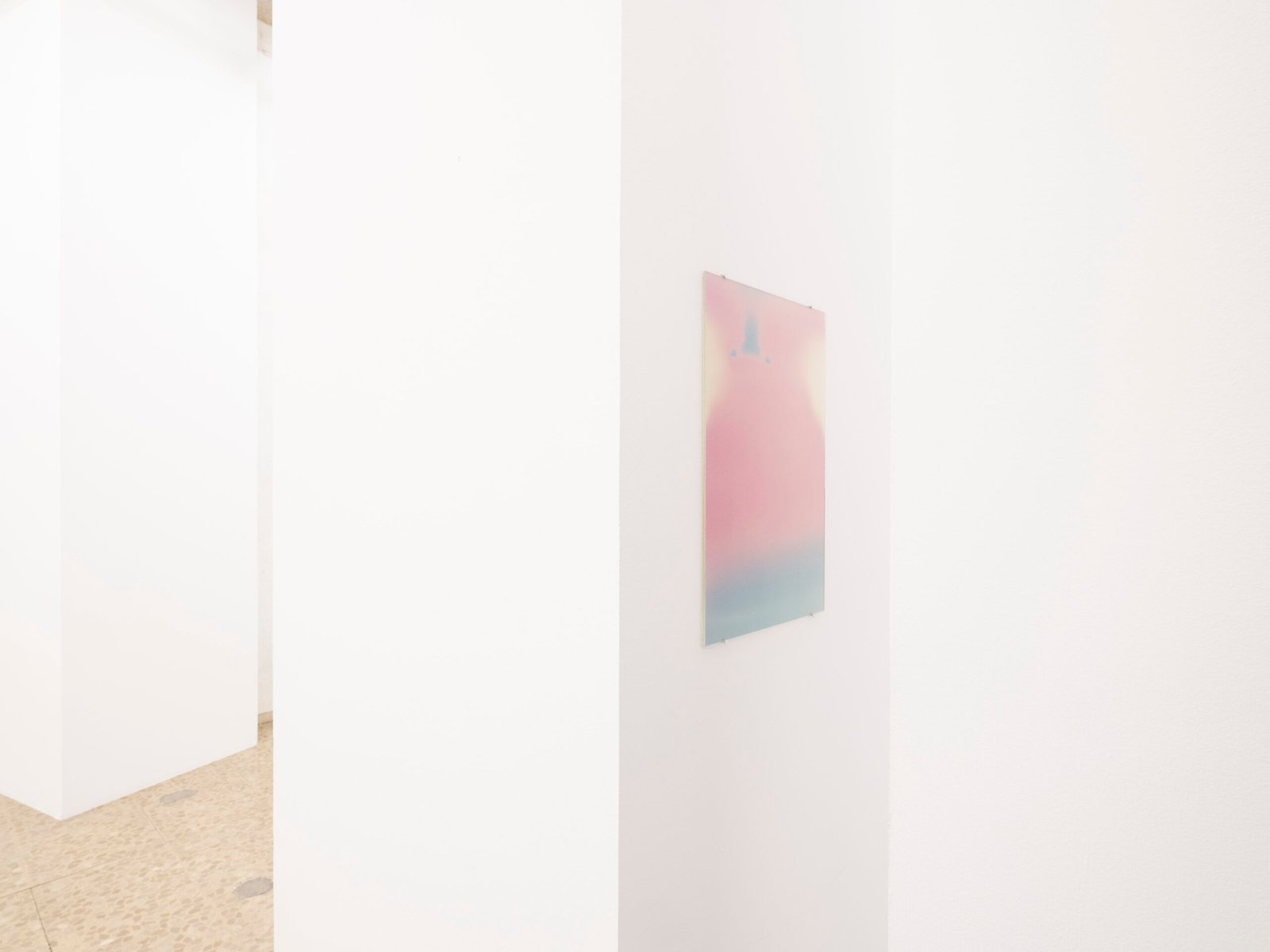
Exhibition by Mikel Escobales at Dilalica. From 17 September to 31 October 2026.
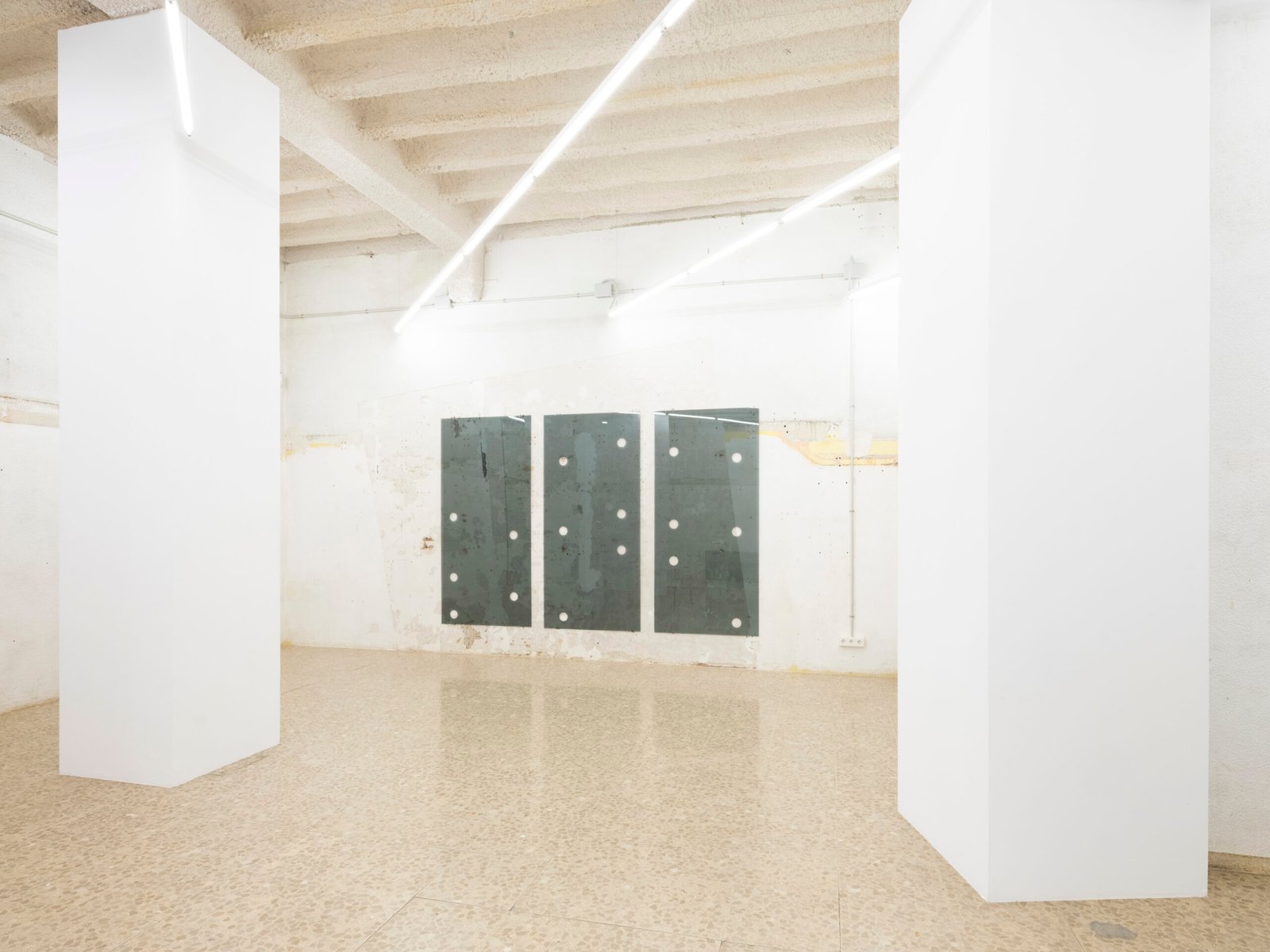
A pane of glass shows us what lies behind it, yet, paradoxically, it never stops showing itself. The French philosopher and art critic Louis Marin wrote about this in relation to painting and the fantasy of representation as a transparent duplicate of things: “to be present and absent at the same time is a good visual and conceptual definition of a transparent thing: a pane of glass through which I look at the landscape beyond. If it has scratches, or stains or smudges, I suddenly see the windowpane itself instead of the garden, its lawn and its trees” (1). In that instant, the glass shows itself and diverts the gaze toward its own surface. These shifts in the plane of perception are, for Marin, a condition of all representation, and it is here that Mikel Escobales’s works are situated: what lies behind the glass sculptures dissolves into surfaces and reflections, and what reaches our gaze is the result of this tension between transparency and opacity.
With the expression “hacerse rala” — to grow sparse, or thin out — Mikel Escobales brings into his practice a set of processes tied to the loss of density, of the consistency things once had, of the solidity an object used to hold. To grow sparse, beyond simply disappearing or losing consistency, means that something stops appearing as a compact whole, introducing gaps or pauses where there once seemed to be continuity. In this sense, the term also applies to grape clusters when they fail to fill out completely, leaving gaps where a tightly packed fruit should be. Without ever fully disappearing, this process of growing sparse produces a state that is less compact, run through with gaps.
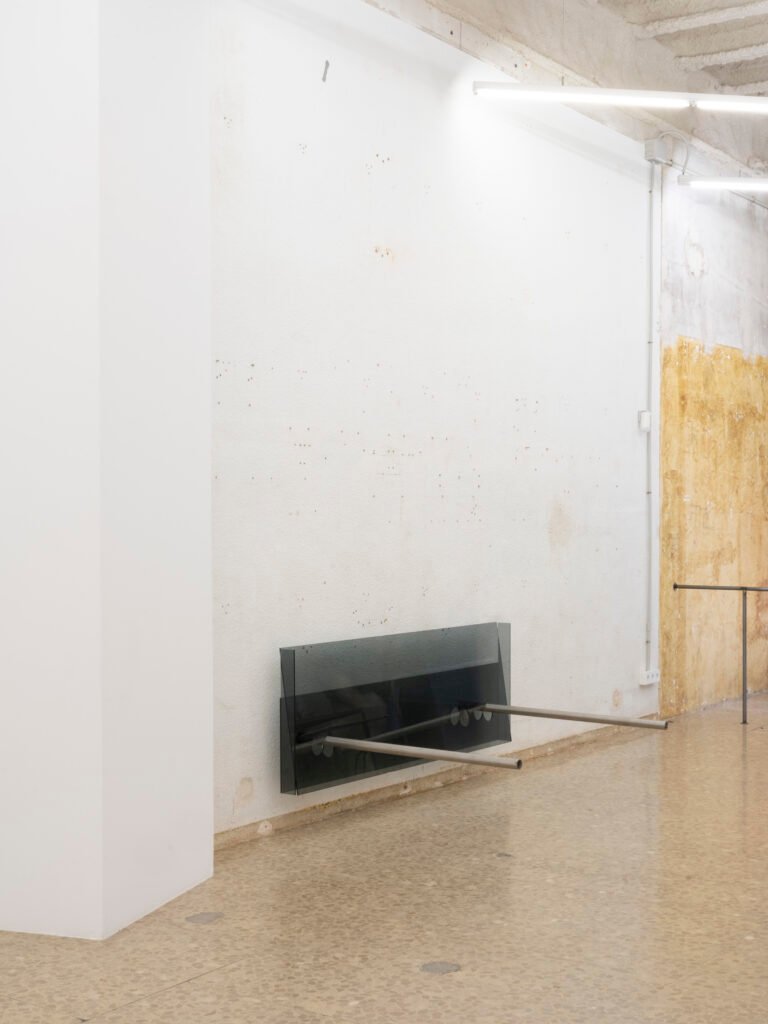
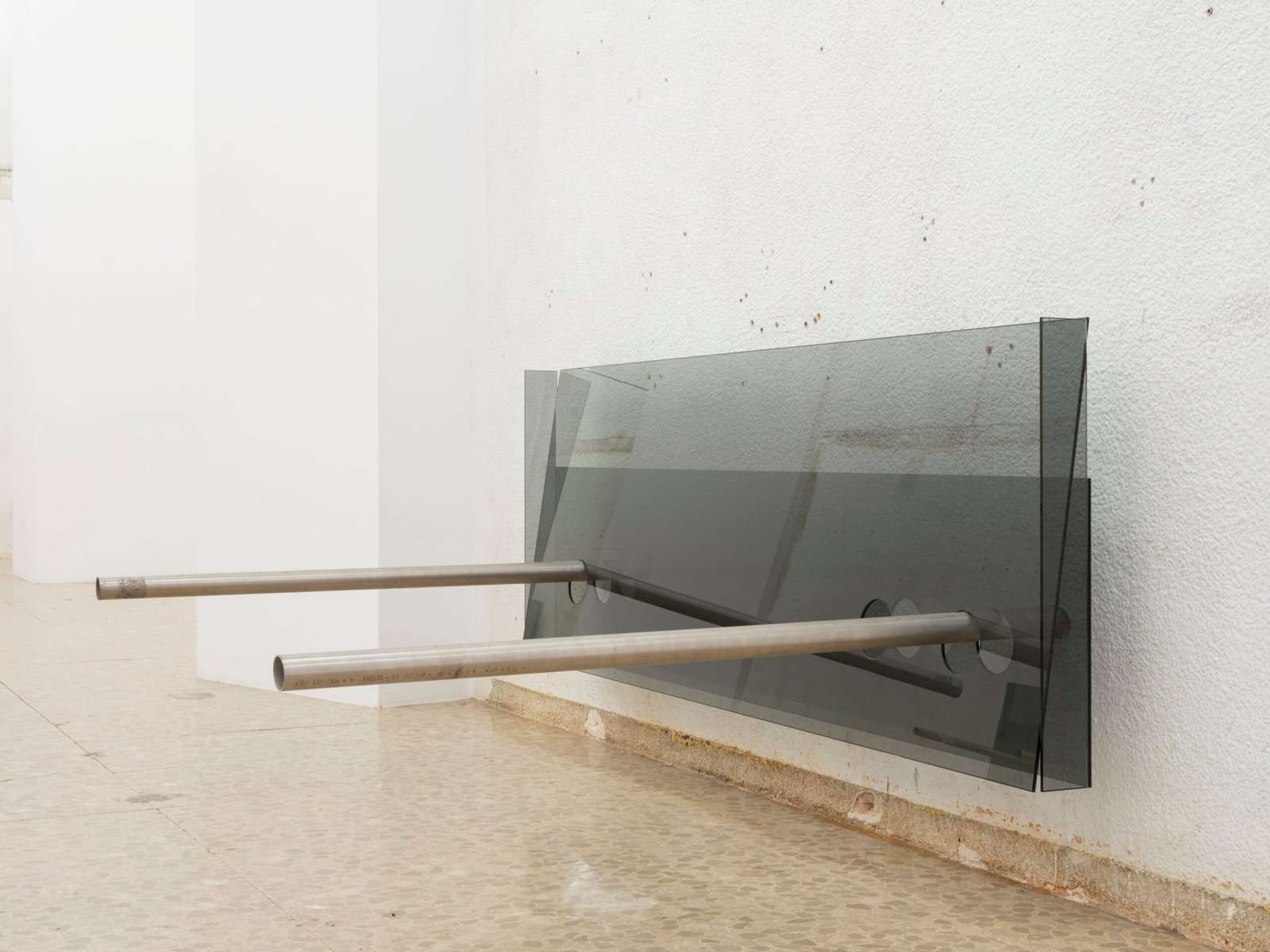
This unsaturated condition runs through the works that make up the exhibition, from the glass sculptures to the photographs. In the sculptures, transparency is affected by the materiality of the pieces. The panes of glass overlap, are pierced, and are run through by metal tubes that project out into the space, so that whatever we see through them is inevitably mixed with reflections and shadows. The wall, which should function as a backdrop, then reappears on the surface, and background and surface stop occupying stable positions.
One operation of opacity takes place in whatever remains materially present in a sign when it represents something else. In its bid for transparency, representation aspires to erase itself in order to bring forth what it represents, but its own matter can never be fully eliminated. In Mikel Escobales’s works, this residue occupies a privileged space, insofar as the image or the glass stops pointing unambiguously toward a referent and instead presents itself as a thing in its own right.
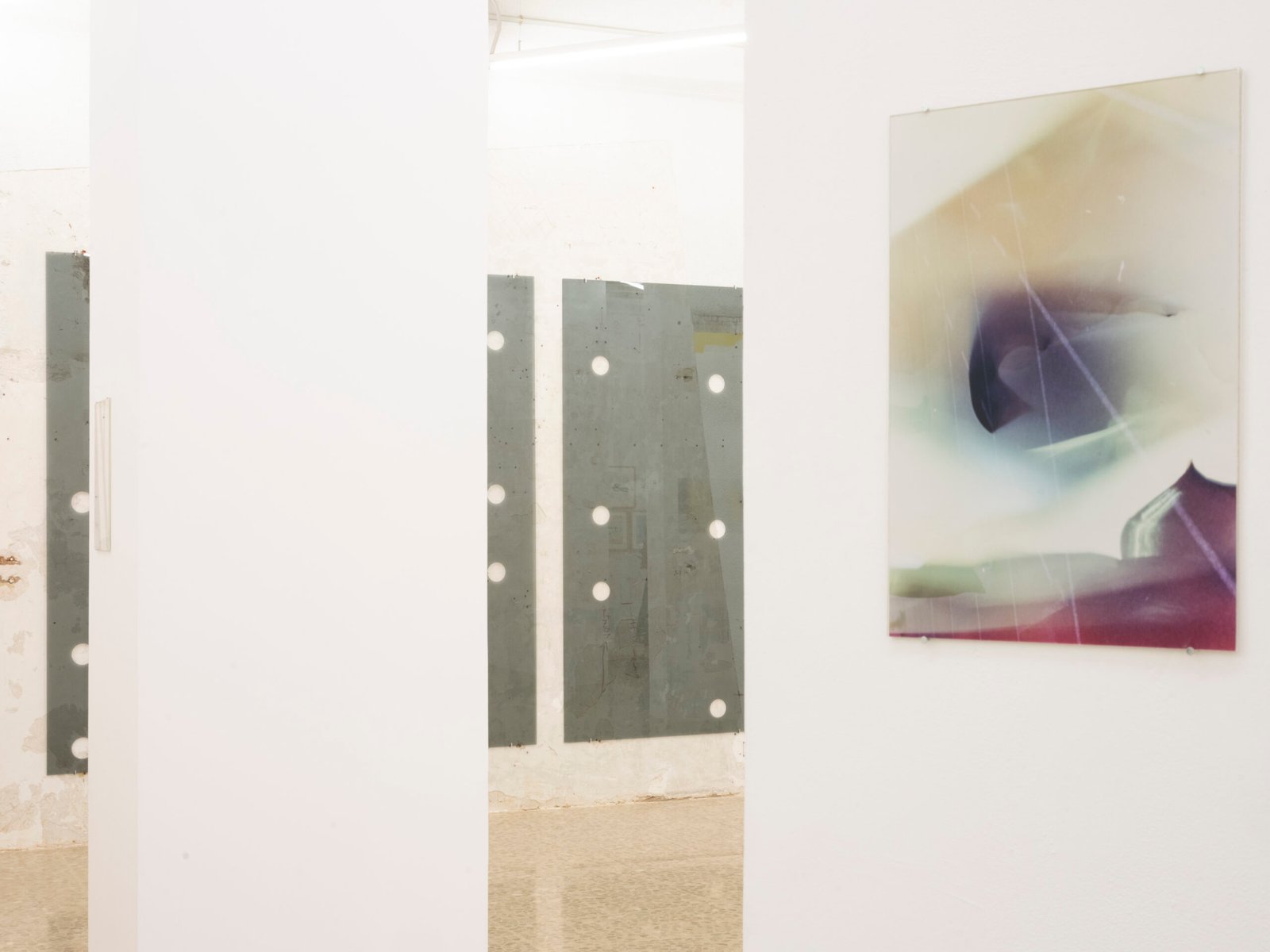
This happens in the photographs, where some fragments of objects can still be recognised, but the referent has largely weakened to the point where it becomes difficult to name. Patches of colour take the place of what we would expect to recognise. Without disappearing completely, what grows sparse here is the images’ capacity to lead us clearly back to the object they came from. In this sense, they recall the question the art historian Erwin Panofsky poses before Giorgione’s The Tempest: at what point does a yellow smear stop being simply a smear and become a bolt of lightning? (2) Naming what we see, then, restores a stability that visual experience itself does not necessarily contain.
Growing sparse can be understood less as a total disappearance of things than as a making of space, so that other kinds of relationships — less saturated, less compact — can take place. If we accept that there can be no simple opposition between transparency and opacity, and instead attend to the forces that connect them (superposition, concealment, fusion, ambivalence…), we can understand the operation Mikel Escobales carries out with his pieces, all of them sensitive to these tensions: photography loses its object, glass absorbs what should have remained behind it, and space enters the work through light and reflection.
Nothing ever fully disappears, but nothing stays entirely in place either. Growing sparse might also mean no longer fully coinciding with a fixed form, or no longer taking for granted that everything must be entirely still.
(1) Louis Marin, “Opacity and Transparence in Pictorial Representation”, Est: grunnlagsproblemer i estetisk forskning (Oslo), no. 2, 1991, p. 57.
(2) Louis Marin, “Opacity and Transparence in Pictorial Representation”, op. cit., p. 65.